

Electrostatic paint spraying machine

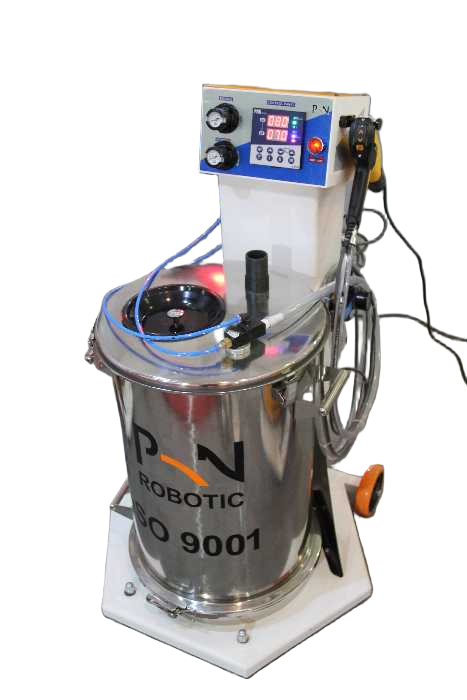
⚙️ Technical Specifications
Coating type Electrostatic powder
Spray system Manual / Automatic
Output voltage Adjustable 0–100 kV DC
Output current 0–200 μA
Powder hopper capacity 20–60 L (powder container)
Spray gun type Pneumatic gun with adjustable nozzles
Controller Digital / analog panel with voltage & current adjustment
Hose length 5–10 m
Air compressor Required for optimal performance (typically 6–8 bar)
Grounding system Strong earthing cable to prevent electric shock
Machine dimensions Variable, portable or fixed (depending on model)
🌟 Advantages
- Excellent adhesion of powder to metal surfaces
- Reduced overspray and powder savings
- No use of chemical solvents (eco-friendly)
- High resistance to heat, corrosion, and impact
- Quick curing in oven without air-drying time
- Uniform coverage with controlled thickness
- Easy maintenance and replaceable parts
🛠️ Applications
- Automotive industry (car parts)
- Home appliances (refrigerators, stoves, coolers)
- Metal furniture (chairs, tables)
- Industrial equipment and tools
- Electrical and electronics (control panels)
- Coating of building components (railings, stairs, guards)
Cyclone Paint Collector


📐 Technical Specifications
Overall dimensions In 9-filter model (polyester), approx. 290×150×100 cm (customizable sizes available)
Motor Motogen 3-phase, 3 kW, 2800 RPM with centrifugal fan (Boguard)
Filters 6–9 polyester filters depending on model
Body material Stainless steel or powder-coated steel for durability
Separation efficiency 85–95% for particles 15–20 microns
Warranty Typically 12 months
📌 Working Principle
- Powder-laden air enters the conical chamber spirally.
- Centrifugal force drives heavier particles to the walls and into the collection chamber.
- Cleaner air with lighter particles moves upward into secondary filters or exhaust fan.
- Collected powder at the bottom is stored for reuse.
🌟 Advantages
- High powder savings: 30–90% recovery and reuse
- Increased production efficiency: faster operation, less downtime
- Fan protection: fan located outside particle path, extending its lifespan
- Reduced workplace pollution: prevents dust escape, ensuring operator safety
- Lower maintenance costs: no expensive filters, few moving parts
🛠 Applications
- Powder coating booths in metal & automotive industries
- OEM and industrial coating lines
- High-mix or mass production coating units
- Industries requiring powder recovery and reuse
🧩 Main Components
- Multiple fabric filters: micro-particle separator
- Motor + centrifugal fan: creates suction
- Stainless steel conical body: ensures vortex flow
- Lower collection hopper: gathers recovered powder
- Direct connection to coating booth: prevents leakage
🔄 Installation & Operation
- Connect cyclone inlet to booth or exhaust hood
- Install motor-fan matched to line capacity
- Ensure cone angle (~20–70°) for proper flow
- Allow 8–10 min settling after spraying before cleaning filters
- Screen recovered powder before reuse
Conveyor Oven


The conveyor oven is a continuous industrial furnace in which parts move on a conveyor belt and automatically pass through heating, drying, or curing stages. Ideal for powder and liquid coatings, drying, or light heat treatment in mass production lines.
⚙️ Technical Specifications (Sample)
Type Continuous with chain or belt conveyor
Internal dimensions 1200 × 150 × 400 cm (customizable)
Heating system Gas burner or electric heaters
Temperature control High-precision digital PID thermostat
Working temperature 50–250 °C
Inner chamber material Heat-resistant stainless steel or galvanized steel with ceramic insulation
Insulation Rock wool or ceramic wool (7.5–10 cm)
Conveyor Steel chain with strong frame or heat-resistant belt
Conveyor speed Adjustable (0.5–5 m/min) via inverter
fans for hot air circulation
🌟 Advantages
- Continuous operation, higher productivity
- Accurate temperature control throughout oven
- Less manpower due to automation
- Adjustable settings for various parts and coatings
- Lower energy consumption due to full insulation
- Fully customizable design
🛠 Applications
- Curing electrostatic powder coating
- Drying parts after washing or coating
- Light heat treatments (pre-heating, stress relief)
- Mass production of painted metal parts
- Automotive, bicycle, shelving, and more
Monocyclone

Mono-Cyclone Powder Separator
⚙️ Technical Specifications
Body material Carbon steel or stainless steel
Sheet thickness 2–5 mm (customizable)
Airflow capacity 1000–15000 m³/h
Separation efficiency Up to 95% for particles >5 microns
Installation type Vertical with base or suspended
Discharge type Manual or automatic (rotary valve or bag)
Coating Industrial epoxy or electrostatic powder
🌟 Advantages
- Simple structure, easy maintenance
- High efficiency for coarse dust
- No electrical power required (in some models)
- High abrasion resistance
- Usable in high-temperature or corrosive environments
🛠 Applications
- Pre-filter in final filtration systems (e.g., bag filters)
- Dust collection in coating, foundry, woodworking, cement, brick, and metal industries
- Powder/granule conveying systems
- Chemical, pharmaceutical, and food industries (with stainless steel)
Paint Gun

⚙️ Technical Specifications (Advanced Model)
Type Manual / Automatic
Output voltage Up to 100 kV (adjustable)
Charge type Electrostatic (positive/negative)
Air pressure required 5–8 bar
Powder output 0–600 g/min
Weight 500–700 g
Nozzle material Anti-wear Teflon or stainless steel
Nozzle types Flat, round, profile (interchangeable)
Cleaning Air blow + special detergents
🌟 Advantages
- Uniform coating with high coverage
- Reduced powder waste, higher efficiency
- Lower energy consumption compared to wet paint
- Can use recycled powders
- Fast coating process
- Safer for operators (with safety compliance)
- Long service life with proper maintenance
🛠 Applications
- Metal furniture and cabinet manufacturing
- Automotive parts coating
- Home appliances (ovens, washing machines, etc.)
- Lighting fixtures, racks, control panels
- Industrial equipment & steel structures
Bag Filter

⚙️ Technical Specifications
Filter type Baghouse filter
Bag materials Polyester, Nomex, fiberglass, polypropylene
Number of bags 10–500 (depending on system capacity)
Bag diameter 120–160 mm
Bag length 1–3 m
Max working temperature 100–260 °C (depending on fabric)
Cleaning system Pulse jet, mechanical shaker, or reverse air
Filtration efficiency <99% for particles >1 micron
🌟 Advantages
- Very high filtration efficiency
- Operates under high temperature
- Easy bag replacement
- Relatively low energy consumption
- Suitable for heavy-dust industries
🛠 Applications
- Steel and foundry industries
- Cement, lime, gypsum plants
- Wood and MDF factories
- Paint and powder coating workshops
- Power plants
- Mining and crushing industries
Tunnel Oven


⚙️ Technical Specifications
Type Tunnel (continuous)
Energy source Natural gas, diesel, or electric heaters
Length 6–18 m (depending on capacity)
Internal width 80–150 cm
Internal height 150–200 cm
Temperature range 180–220 °C
Air circulation Recirculating with heat-resistant fans
Insulation High-density rock wool or refractory sandwich panels
Curing time 20–30 min depending on paint type and thickness
Control system Digital thermostat or PLC with sensors
🌟 Advantages
- Continuous curing with minimal downtime
- Lower energy consumption vs. box ovens
- High precision temperature control & uniform heat distribution
- High production speed and large capacity
- Enclosed design reduces dust and pollution
- Strong insulation for lower heat loss
- Advanced control systems for safety
🛠 Applications
- Automotive industry (metal parts, chassis, bumpers)
- Industrial kitchen equipment
- Shelving, furniture, and metal fittings
- Construction industry (doors, windows, railings)
- Electrical industry (panels, racks, industrial parts)
4Stage Pre-treatment System

🔧 Technical Specifications
Stages 4 (Degreasing, Rinse 1, Phosphating/Nano, Rinse 2)
Process type Spray or Dip
Tank material SS304 stainless steel or epoxy-coated galvanized steel
Tank volume 500–2000 L (customizable)
Control system Manual or automatic (PLC, thermostat, timer)
Working temperature 45–60 °C
Pump type Acid-resistant centrifugal (1–3 HP)
Transfer system Overhead or floor conveyor (monorail)
Nozzles Polypropylene or corrosion-resistant stainless steel
📌 Process Description
1.Degreasing: Removal of oil, grease, and dirt with alkaline or industrial detergents.
2.Rinse 1: Water wash (tap or DI) to remove degreaser residues.
3.Phosphating / Nano Coating: Protective layer for better paint adhesion and corrosion resistance.
4.Final Rinse: Preparing surface for coating booth.
🌟 Advantages
- Improved paint adhesion & longer durability
- Extended part life by preventing corrosion
- Eco-friendly (with nano coating option)
- Fully customizable per production line
- Compatible with automatic coating systems
🛠 Applications
- Automotive industry
- Painting of household & industrial equipment
- Electrical & electronic parts
- Profiles, panels, metal doors
- Medical and defense equipment
